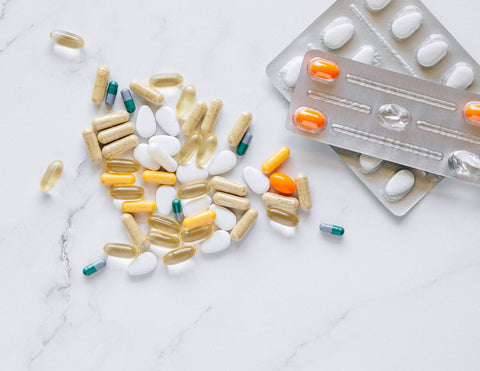
Small human studies suggest glycine may help some sleep-related outcomes, but the evidence is limited. Two frequently cited studies used 3 g before bed. MA lists 1 g per serving, so those findings should not be presented as proof of the same effect from MA. 2007 study · 2012 study
Glycine appears on many melatonin-free sleep labels. The important question is what was actually tested. This article looks at the participants, dose and outcomes rather than treating the presence of an ingredient as a guarantee.
What did the human studies find?
Yamadera and colleagues, 2007
This randomized, single-blind crossover study involved 11 adults with unsatisfactory sleep. Participants took 3 g of glycine or placebo before bed. Researchers reported improvements in subjective sleep quality and some measured sleep outcomes, including shorter latency to sleep onset. The study was small and brief, and several authors were affiliated with Ajinomoto. It was not a study of MP-MA or a trial specifically in men with low testosterone. Read the original study and methods
Bannai and colleagues, 2012
Seven participants were included in the human analysis of this sleep-restriction experiment. The researchers used 3 g of glycine before bed while time in bed was reduced. Fatigue improved on the first day, but not the third; vigilance reaction time improved on both test days, while several other measures did not differ significantly. This was a short experiment in healthy volunteers, not evidence that glycine treats chronic insomnia or replaces adequate sleep. Read the open-access research
Why promising findings are not a guarantee
The studies answer narrow questions under particular conditions. A useful evidence review asks whether the results have been repeated in larger groups, whether improvements matter in everyday life, and whether the same formulation and dose were tested. A positive result on one measure does not automatically answer every sleep question.
Neither experiment establishes a testosterone benefit from glycine. Avoid turning “a sleep outcome improved” into “this supplement raises testosterone.” Our science page explains the distinction between ingredient research, background sleep research and the finished formula.
How does the study dose compare with MA?
The MA Supplement Facts list 1,000 mg of glycine per three-capsule serving. That is 1 g, compared with 3 g in the studies discussed above. MA also contains other ingredients, so it is a different intervention. The complete formula cannot inherit the results of a single-ingredient trial.
Do not take extra MA capsules to imitate a study dose: doing so also increases the other ingredients and exceeds the labelled serving. Inspect the MA label and follow its directions. Our label-reading checklist helps make these comparisons.
Common questions
Is glycine the same as melatonin?
No. They are different substances, and a melatonin-free label is not itself evidence of effectiveness. For the wider discussion, read melatonin and other sleep-support approaches.
Does it replace treatment for insomnia?
No. NCCIH describes the evidence for many complementary sleep approaches as limited or inconsistent and identifies cognitive behavioral therapy for insomnia as a strongly recommended treatment. Persistent sleep problems deserve clinical assessment. NCCIH: sleep approaches and safety
What is a sensible next step?
Start with the problem you want help with: falling asleep, repeated waking or daytime fatigue. Keep a short record to discuss with your clinician rather than changing several products at once. For related reading, see repeated nighttime waking and magnesium and sleep.
Explore the men’s wellness evidence guide · How we present the research
By the MP-MA Team · Published October 11, 2026. General education, not a diagnosis or personalized treatment plan. MP-MA sells dietary supplements; the research discussed here does not establish the effectiveness of the complete MP-MA system.