- Magnesium supports the calming side of the nervous system, which is why it is linked to better, deeper sleep.
- Many men don't get the recommended intake, and hard training depletes it further.
- The best-absorbed forms (glycinate, citrate) matter more than the headline dose; oxide is poorly absorbed.
- For men, better deep sleep has a bonus - it is when most testosterone is produced.
Magnesium is the most popular "natural sleep" mineral - but does it actually work, or is it just hype? This guide separates the evidence from the marketing: what magnesium does, who benefits most, which form to choose, and why it matters doubly for men.
Does magnesium actually help you sleep?

How it works
Magnesium is involved in hundreds of processes in the body, several of which relate to relaxation and sleep. It supports the activity of GABA, the main calming neurotransmitter, and helps regulate the stress response. In practice, that is why people describe magnesium as helping them "switch off" in the evening rather than making them drowsy on command. It nudges the nervous system toward the rest-and-recover state.
Most men don't get enough
Magnesium intake falls short of the recommended amount for a large share of adults, according to national nutrition data (NIH Office of Dietary Supplements). Men who train hard lose extra through sweat, and stress depletes it further - a double drain. Since the sleep benefit is clearest in those who are low, a lot of men are exactly the people most likely to notice an improvement. Food sources include leafy greens, nuts, seeds, legumes and whole grains.
Which form to choose
The form matters more than the number on the front of the bottle:
- Magnesium glycinate - well absorbed and gentle on the stomach; the glycine component is itself calming, making this a popular choice for sleep.
- Magnesium citrate - well absorbed, though higher doses can be laxative.
- Magnesium oxide - cheap and common, but poorly absorbed - much of it isn't used.
A smaller dose of a well-absorbed form beats a big dose of oxide.
Why it matters more for men
For men there is a bonus. Most testosterone is produced during deep sleep, and sleep restriction lowers it measurably - a 10-15% drop from a week of five-hour nights (Leproult & Van Cauter, 2011). Anything that supports deeper, more consolidated sleep therefore supports the window where recovery and testosterone happen. Magnesium pairs especially well with glycine, which has its own evidence for improving sleep quality (Bannai et al., 2012).
How to use it
- Timing: take it in the evening, 30-60 minutes before bed.
- Form: prefer glycinate or citrate over oxide for absorption.
- Dose: a sensible supplemental amount (often around 200-400 mg elemental) suits most men; start lower if you're prone to loose stools.
- Consistency: use it nightly - the effect is about supporting ongoing sleep quality, not a one-off hit.
Where MP-MA fits
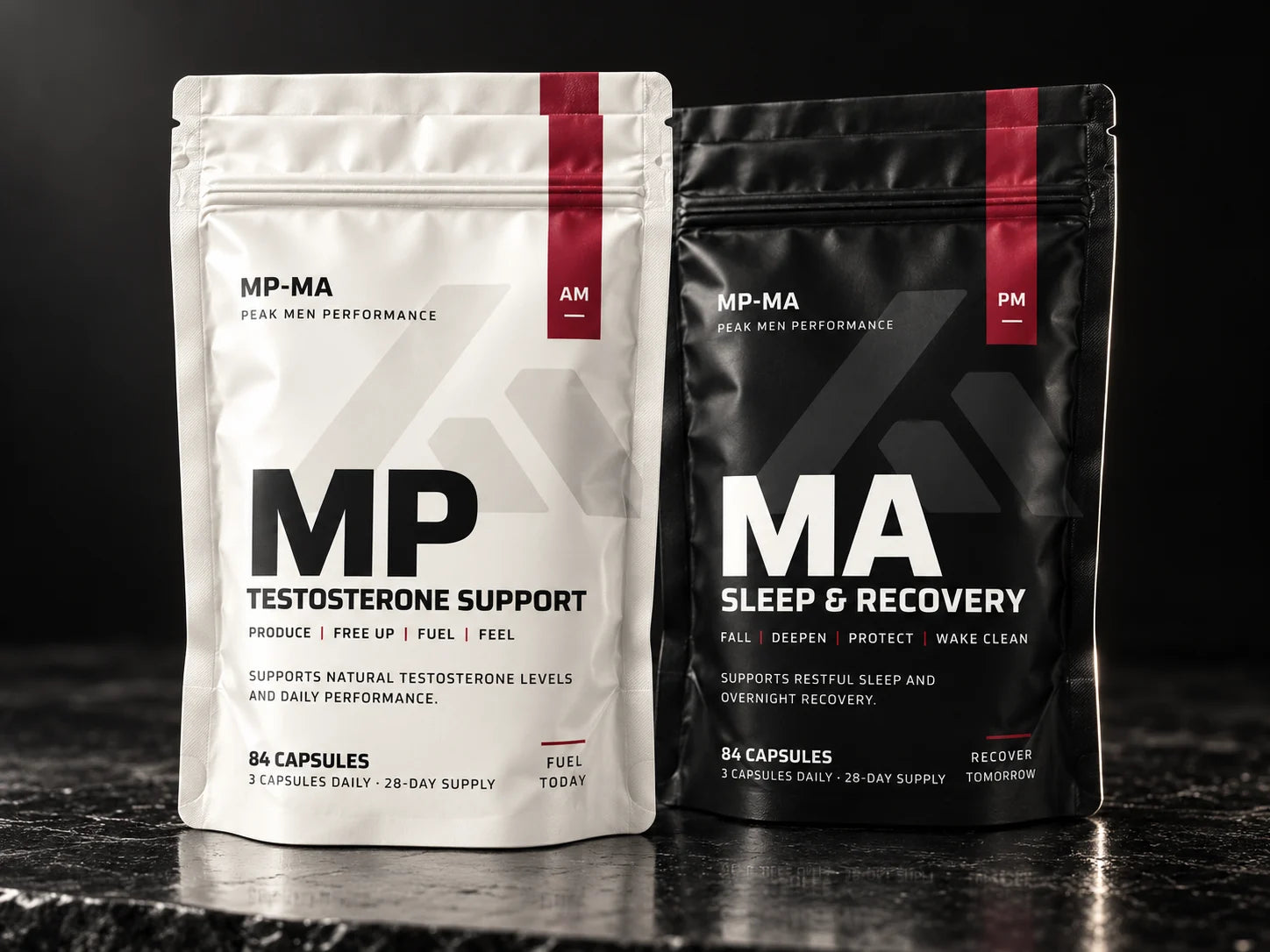
MP-MA's melatonin-free MA formula uses a well-absorbed form of magnesium alongside glycine, L-theanine and ashwagandha - a combination built to support deep, restorative sleep and overnight recovery, every dose on the label. See the research on our science page or explore the MP-MA Day & Night System.
Frequently asked questions
Does magnesium really help you sleep?
It supports the calming side of the nervous system and sleep quality, with the clearest benefit in people who are low in magnesium or struggle to wind down.
What is the best magnesium for sleep?
Magnesium glycinate is a popular choice - well absorbed, gentle on the stomach, and the glycine itself is calming.
When should I take magnesium for sleep?
In the evening, around 30-60 minutes before bed, taken consistently each night.
Can magnesium help testosterone?
Indirectly - by supporting the deep sleep where most testosterone is produced, and because many men don't get enough magnesium to begin with.
Sources
- Bannai M, et al. The effects of glycine on subjective daytime performance in partially sleep-restricted healthy volunteers. Front Neurol. 2012. PubMed
- Leproult R, Van Cauter E. Effect of 1 week of sleep restriction on testosterone levels in young healthy men. JAMA. 2011. PubMed
- NIH Office of Dietary Supplements - Magnesium Health Professional Fact Sheet. ods.od.nih.gov
- MP-MA. The science & full reference list. mp-ma.com/pages/science
These statements have not been evaluated by the Food and Drug Administration. This product is not intended to diagnose, treat, cure, or prevent any disease. This article is for general education and is not medical advice.
Continue your research
Compare the evidence for another sleep-related ingredient in our review of glycine research. Glycine for Sleep: What the Studies Actually Show
Browse related topics in our men’s wellness evidence guide.