- Waking at 3am is usually normal sleep-cycle timing meeting an early-morning cortisol rise - not a disease.
- The second half of the night is lighter sleep, so small disturbances wake you and are harder to recover from.
- Most of a man's testosterone is produced during sleep, and research links short or broken sleep with lower testosterone.
- Better sleep habits, lower evening stress and the right nutrients (magnesium, glycine, L-theanine, ashwagandha) help most.
- See a doctor if it is frequent and comes with loud snoring, gasping, or daytime exhaustion.
If you fall asleep fine but snap awake around 3am - eyes open, mind already racing - you are in very good company. It is one of the most common sleep complaints from men in their late 30s, 40s and 50s. And while it feels random, it almost never is.
The 3am wake-up has a surprisingly logical explanation rooted in how your sleep is structured and how your hormones shift overnight. In this guide we will walk through exactly what is happening in your body at that hour, why it matters more for men than most people realise, the seven most common triggers, and a practical, evidence-informed plan to sleep through the night again.
The short answer
In other words, 3am is not a mysterious "witching hour". It is simply the point in the night where your sleep is most fragile and your body is already preparing to wake for the day. Fix what is tipping you over the edge, and the wake-ups usually fade.
What's happening in your body at 3am
Your night is not one flat block of sleep. You move through repeating cycles of roughly 90 minutes, alternating between lighter and deeper stages. Understanding that pattern explains almost everything about the 3am wake-up.
Sleep gets lighter after midnight
Most of your deep, slow-wave sleep is packed into the first half of the night - that is when your body does its heaviest physical repair. As the night goes on, the cycles shift toward lighter sleep and more dreaming (REM). By the early hours you are spending far more time in stages you can easily be woken from. A noise, a temperature change or a full bladder that you would sleep straight through at midnight can pull you fully awake at 3am.
Cortisol begins its morning climb
Cortisol is the hormone that eventually wakes you for the day. It is lowest in the first part of the night and starts climbing in the small hours, building toward a peak shortly after you wake - a pattern researchers call the cortisol awakening response. In a calm, well-recovered body that rise happens quietly in the background. If you are stressed, under-slept or over-trained, the same rise can tip you from light sleep into full, wide-eyed wakefulness.
Why you then cannot get back to sleep
Once you are awake and cortisol is rising, your brain is primed for alertness. Check the clock, start problem-solving, or reach for your phone, and you reinforce it - light and mental stimulation push cortisol higher and melatonin lower, exactly the wrong direction.

Why 3am matters for men's testosterone
You make testosterone while you sleep
For men, sleep is production time. Testosterone synthesis ramps up overnight and peaks in the early morning after a full night's rest, with the deep and REM stages playing a central role. Cut the night short, or break it into pieces, and you cut straight into that production window.
The research is clear
In a well-known study published in JAMA, researchers restricted healthy young men to five hours of sleep for one week and measured a 10-15% drop in their daytime testosterone - the kind of decline you would otherwise expect from 10 to 15 years of ageing (Leproult & Van Cauter, 2011). Broader reviews continue to link short and fragmented sleep with lower testosterone and worse next-day energy, mood and drive.
It can become a cycle
Lower testosterone can, in turn, make sleep lighter and more fragmented - so a handful of bad nights can quietly snowball into a pattern. The encouraging part: that loop almost always breaks from the sleep side first. Protect your nights and you support the hormone at the same time.
7 common reasons men wake up at 3am
- Stress and a racing mind. The most common cause by far. A busy head plus the natural early-morning cortisol rise is the classic 3am combination, and worry about being awake only makes it worse.
- Alcohol. A drink helps you fall asleep, but as it is metabolised it fragments the back half of the night, suppresses REM and triggers wake-ups - often right around 3am.
- Blood-sugar dips. A large, late, carb-heavy meal can cause a blood-sugar spike and rebound that nudges you awake in the early hours.
- A full bladder. Fluids - especially alcohol and caffeine - late in the evening mean a 3am trip to the bathroom, and then trouble settling again.
- Age. Deep sleep naturally declines with age, so you spend more of the night in the easy-to-wake lighter stages. This is a big reason the 3am wake-up becomes more common after 40.
- Screens and late light. Blue light in the evening suppresses melatonin, pushes your body clock later and thins your deep sleep, leaving you more wakeable.
- Caffeine too late. Caffeine has a half-life of around five to six hours, so an afternoon coffee can still have a meaningful amount working against you at 3am.

How to stop waking up at 3am
Most of the fix is behavioural, and it is worth doing first - it is free and it genuinely works.
Fix the foundations
- Keep a consistent sleep and wake time, even on weekends - this is the single most powerful lever.
- Stop caffeine by early afternoon.
- Keep alcohol moderate and finish it a few hours before bed.
- Eat your last big meal two to three hours before sleeping.
- Get bright daylight in the morning and dim the lights in the evening.
- Keep the bedroom cool, dark and quiet (around 18 C / 65 F is ideal for most men).
- Put screens away 30-60 minutes before bed, and keep the phone out of reach so you are not tempted to check it at 3am.
Support the night with nutrition
Several ingredients have genuine human research behind them for sleep quality and overnight recovery:
- Magnesium supports the calming side of the nervous system; supplementation has been associated with better sleep quality, particularly in people who are low.
- Glycine taken before bed has been shown to improve subjective sleep quality and next-day performance (Bannai et al., 2012).
- L-theanine supports calm without sedation and has been studied for stress and sleep (Hidese et al., 2019).
- Ashwagandha root extract may help the body handle stress and lower evening cortisol (Lopresti et al., 2019) - directly relevant to the stress-driven 3am wake-up.
Notably, you do not need melatonin. Melatonin mainly shifts your body clock - useful for jet lag or shift work - rather than deepening recovery, and many men dislike the next-day grogginess.
A simple 3-step night protocol
If you want a plan you can start tonight, keep it this simple:
- Wind-down (60 minutes before bed): lights down, screens away, last fluids kept small.
- Support (30 minutes before bed): your evening nutrients - magnesium, glycine, L-theanine, ashwagandha - to help the body settle.
- If you still wake at 3am: do not check the clock or phone. Breathe slowly (a longer exhale than inhale). If you are still awake after about 20 minutes, get up briefly and do something calm in dim light until you feel sleepy, then return to bed.
Where MP-MA fits
MP-MA is built around one idea: your body runs on a 24-hour cycle, so support should too. The evening formula, MA, is a melatonin-free blend designed for exactly this problem - glycine, magnesium, L-theanine, ashwagandha and more to support deep sleep and overnight recovery, with every dose printed on the label. The morning formula, MP, then supports daytime energy, focus and healthy testosterone.
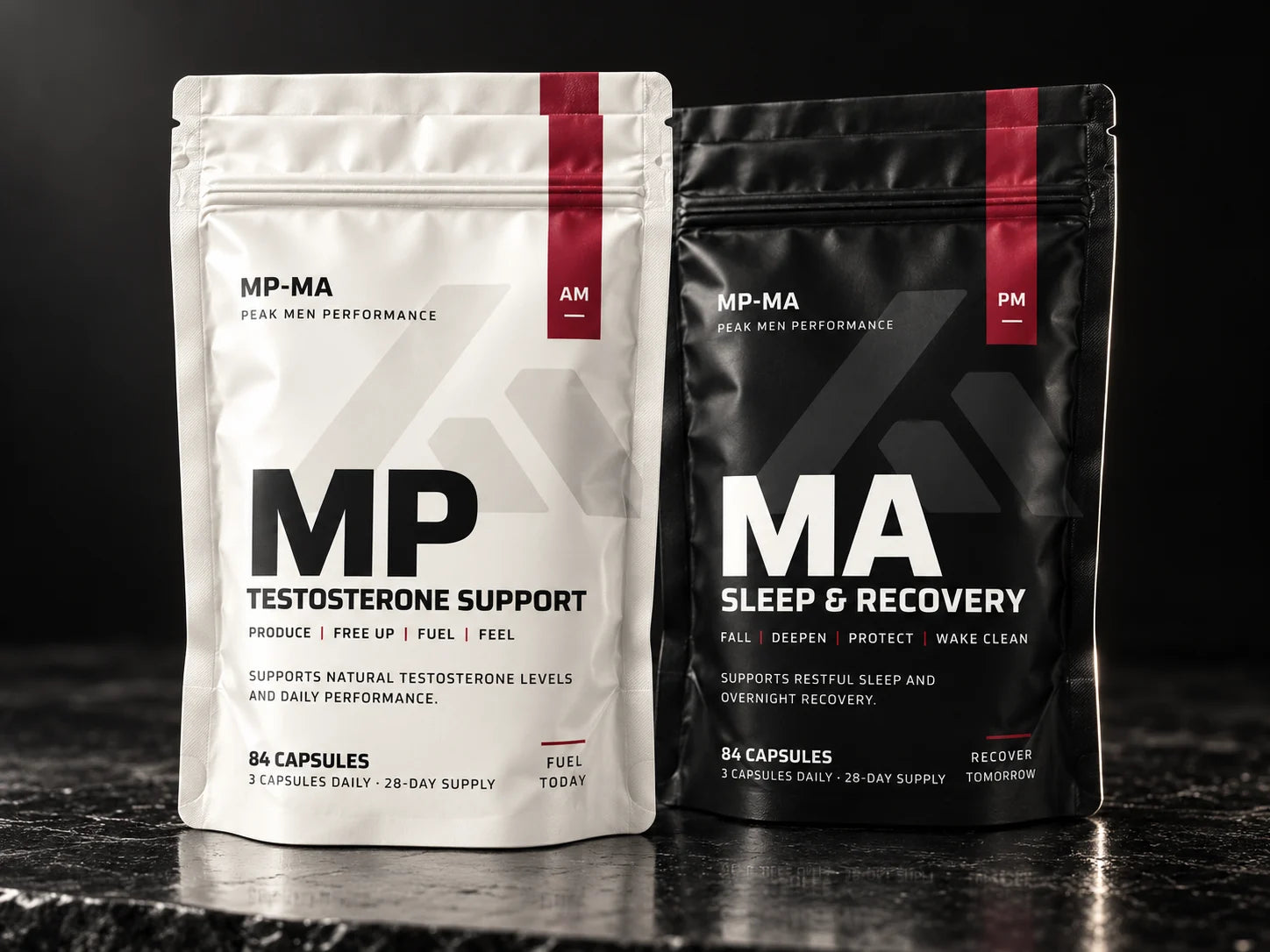
You can see every ingredient and the research behind it on our science page, or explore the MP-MA Day & Night System.
When to see a doctor
Occasional 3am wake-ups are normal and nothing to worry about. But it is worth speaking to a doctor if it is frequent and comes with any of the following:
- Loud snoring, gasping or pauses in breathing - these can be signs of sleep apnea, which is common in men over 40 and strongly disrupts both sleep and testosterone.
- Persistent low mood, anxiety or early-morning waking that does not lift - worth discussing, as it can be linked to depression.
- Frequent night-time urination (nocturia) beyond what fluids explain.
- Restless, crawling sensations in the legs at night (restless legs syndrome).
- Daytime exhaustion that is affecting your work, mood or safety.
These are all treatable - and worth ruling out rather than living with.
Frequently asked questions
Is waking up at 3am a sign of low testosterone?
Not on its own - plenty of everyday things cause it. But because men produce much of their testosterone during sleep, repeatedly broken nights and low testosterone often go together.
Why do I always wake at exactly 3am?
It is the point where your sleep is naturally lightest and cortisol is beginning to rise, so any disturbance is most likely to fully wake you then.
What should I do if I wake at 3am and cannot sleep?
Do not check your phone or the clock. Keep the room dark, slow your breathing, and if you are still awake after about 20 minutes, get up and do something calm in dim light until you feel sleepy.
Does magnesium help you stop waking at night?
Magnesium is studied for better sleep quality, especially if you are low. It supports winding down rather than knocking you out - which is why it is in MP-MA's evening formula.
Is it bad to wake up every night at 3am?
An occasional wake-up is normal. If it is every night and leaving you exhausted, work through the habits above and speak to a doctor to rule out sleep apnea and other causes.
Sources
- Leproult R, Van Cauter E. Effect of 1 week of sleep restriction on testosterone levels in young healthy men. JAMA. 2011. PubMed
- Bannai M, et al. The effects of glycine on subjective daytime performance in partially sleep-restricted healthy volunteers. Front Neurol. 2012. PubMed
- Hidese S, et al. Effects of L-theanine on stress-related symptoms and cognitive function (incl. sleep). Nutrients. 2019. PubMed
- Randomised controlled trial of magnesium bisglycinate and sleep quality. 2025. PubMed
- Lopresti AL, et al. An investigation into the stress-relieving and pharmacological actions of an ashwagandha extract. 2019. PubMed Central
- National Institutes of Health, Office of Dietary Supplements. Magnesium - Health Professional Fact Sheet. ods.od.nih.gov
- MP-MA. The science & full reference list. mp-ma.com/pages/science
These statements have not been evaluated by the Food and Drug Administration. This product is not intended to diagnose, treat, cure, or prevent any disease. This article is for general education and is not medical advice - if sleep problems persist, speak with your doctor.
Continue your research
For a closer look at one sleep-related ingredient, read our review of glycine studies and their limitations. Glycine for Sleep: What the Studies Actually Show
Browse related topics in our men’s wellness evidence guide.