- Zinc and vitamin D are two of the few nutrients with direct human evidence for testosterone.
- The catch: they mainly help when you are deficient - correcting a shortfall, not boosting an already-normal level.
- Both deficiencies are common, especially vitamin D in winter and zinc in men who sweat and train hard.
- More is not better - high-dose zinc in particular can backfire and block copper absorption.
If you only paid attention to two micronutrients for testosterone, zinc and vitamin D would be the ones with the strongest human research. But the headlines oversell them. This guide explains what the studies actually found, who benefits, how much to take, and the mistakes to avoid.
Why these two?
Zinc and testosterone
Zinc is essential for the enzymes involved in producing testosterone. In a classic study, dietary zinc restriction in healthy men significantly lowered testosterone - and supplementing zinc-deficient older men raised it (Prasad et al., 1996). Men who train hard and sweat a lot can lose meaningful zinc, which is why athletes are a common at-risk group. Good food sources include red meat, shellfish (especially oysters), poultry and seeds.
Vitamin D and testosterone
Vitamin D functions more like a hormone, and its receptors appear in tissues involved in testosterone production. In a one-year randomised trial, men who took vitamin D had higher testosterone than those on placebo (Pilz et al., 2011). Deficiency is extremely common - especially in winter, at higher latitudes, and in men who spend most of their day indoors. Sunlight is the main natural source, with smaller amounts from fatty fish and fortified foods.
The deficiency catch
Here is the honest part most marketing skips: the testosterone benefit from zinc and vitamin D shows up mainly in men who are deficient. If your levels are already healthy, topping up further is unlikely to push testosterone higher. These nutrients correct a shortfall - they are not a lever you can keep pulling. The practical implication: they are worth ensuring you're not low in, not megadosing.

How much, and how to take them
- Vitamin D: many men maintain healthy levels on around 1,000-2,000 IU/day, ideally guided by a blood test; take it with a meal containing fat for absorption.
- Zinc: a modest daily amount (commonly 10-15 mg in a supplement) covers most needs; avoid high doses - too much zinc can impair copper absorption and backfire.
- Test if you can: a simple vitamin D blood test tells you whether you actually need more.
- More is not better: with both nutrients, the goal is sufficiency, not excess.
Where MP-MA fits
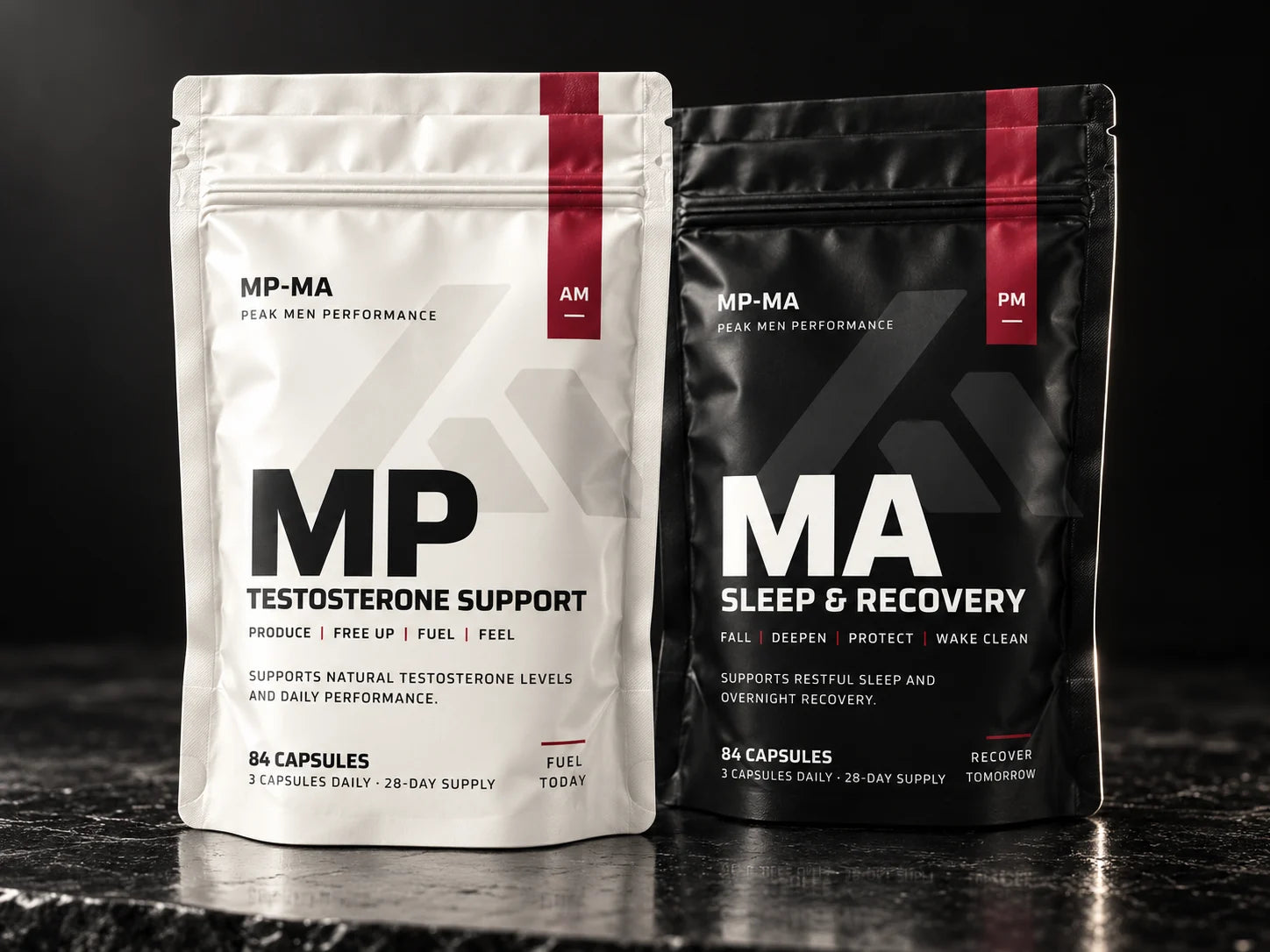
MP-MA includes sensible, transparent doses of both zinc and vitamin D within its day-and-night system - enough to help cover common shortfalls, without the megadosing that can backfire. Every dose is on the label. See the full breakdown on our science page or explore the MP-MA Day & Night System.
Frequently asked questions
Do zinc and vitamin D really boost testosterone?
They can raise testosterone mainly in men who are deficient. If your levels are already healthy, extra is unlikely to help.
How much zinc should a man take?
A modest daily amount (often 10-15 mg in a supplement) is plenty for most men; avoid high doses, which can impair copper absorption.
How much vitamin D for testosterone?
Many men maintain healthy levels on about 1,000-2,000 IU/day, ideally guided by a blood test.
Can I get enough from food and sun?
Often yes for zinc (meat, shellfish, seeds); vitamin D is harder in winter and indoors, which is why many men supplement.
Sources
- Prasad AS, et al. Zinc status and serum testosterone levels of healthy adults. Nutrition. 1996. PubMed
- Pilz S, et al. Effect of vitamin D supplementation on testosterone levels in men. Horm Metab Res. 2011. PubMed
- NIH Office of Dietary Supplements - Zinc Health Professional Fact Sheet. ods.od.nih.gov
- NIH Office of Dietary Supplements - Vitamin D Health Professional Fact Sheet. ods.od.nih.gov
- MP-MA. The science & full reference list. mp-ma.com/pages/science
These statements have not been evaluated by the Food and Drug Administration. This product is not intended to diagnose, treat, cure, or prevent any disease. This article is for general education and is not medical advice.