- Tongkat Ali (Eurycoma longifolia) is a Southeast Asian herb studied for stress, energy and testosterone in men.
- Human trials have linked it to lower cortisol and improved hormonal balance, especially in stressed or older men.
- It appears to work partly by freeing up bound testosterone and easing the stress load on hormones.
- Standardised root extracts, used consistently for several weeks, are what the research used.
Tongkat Ali has quietly become one of the most popular men's herbs in the West - but most write-ups either overhype it or dismiss it. This guide sticks to what the human research actually shows, how it works, and how to use it sensibly.
What is Tongkat Ali?
Its active compounds include quassinoids such as eurycomanone. As with most herbs, the root extract standardised for these actives is the form with the strongest research.
What the research shows
The most-cited human trial found that a Tongkat Ali extract was associated with a meaningful reduction in cortisol and an increase in testosterone, alongside improvements in tension, anger and confusion, in moderately stressed adults (Talbott et al., 2013). Other research in older men and men with low testosterone has reported improvements in hormonal markers and well-being (Henkel et al., 2014). The pattern is consistent with ashwagandha: the clearest benefits appear in stressed or older men rather than young, healthy, low-stress individuals.
How it works
Two mechanisms are proposed. First, Tongkat Ali appears to lower the stress load on the hormonal system - like other adaptogens, less cortisol means less of a brake on testosterone. Second, it may increase the proportion of free (bioavailable) testosterone by influencing the proteins that bind it. Together, that is why men often describe the effect as improved drive and resilience rather than a dramatic spike.

How to use it
- Form: use a standardised root extract (often standardised for eurycomanone).
- Timing: commonly taken in the morning, as some men find it energising; consistency matters most.
- Duration: give it several weeks - trials typically ran four weeks or longer.
- Safety: generally well tolerated in studies; if you take medication or have a health condition, check with your doctor.
What to expect
Tongkat Ali is best viewed as support for stress resilience, energy and healthy testosterone - gradual and modest, not a drug-like effect. Like every ingredient on this site, it works best on top of good sleep, training and nutrition rather than instead of them.
Where MP-MA fits
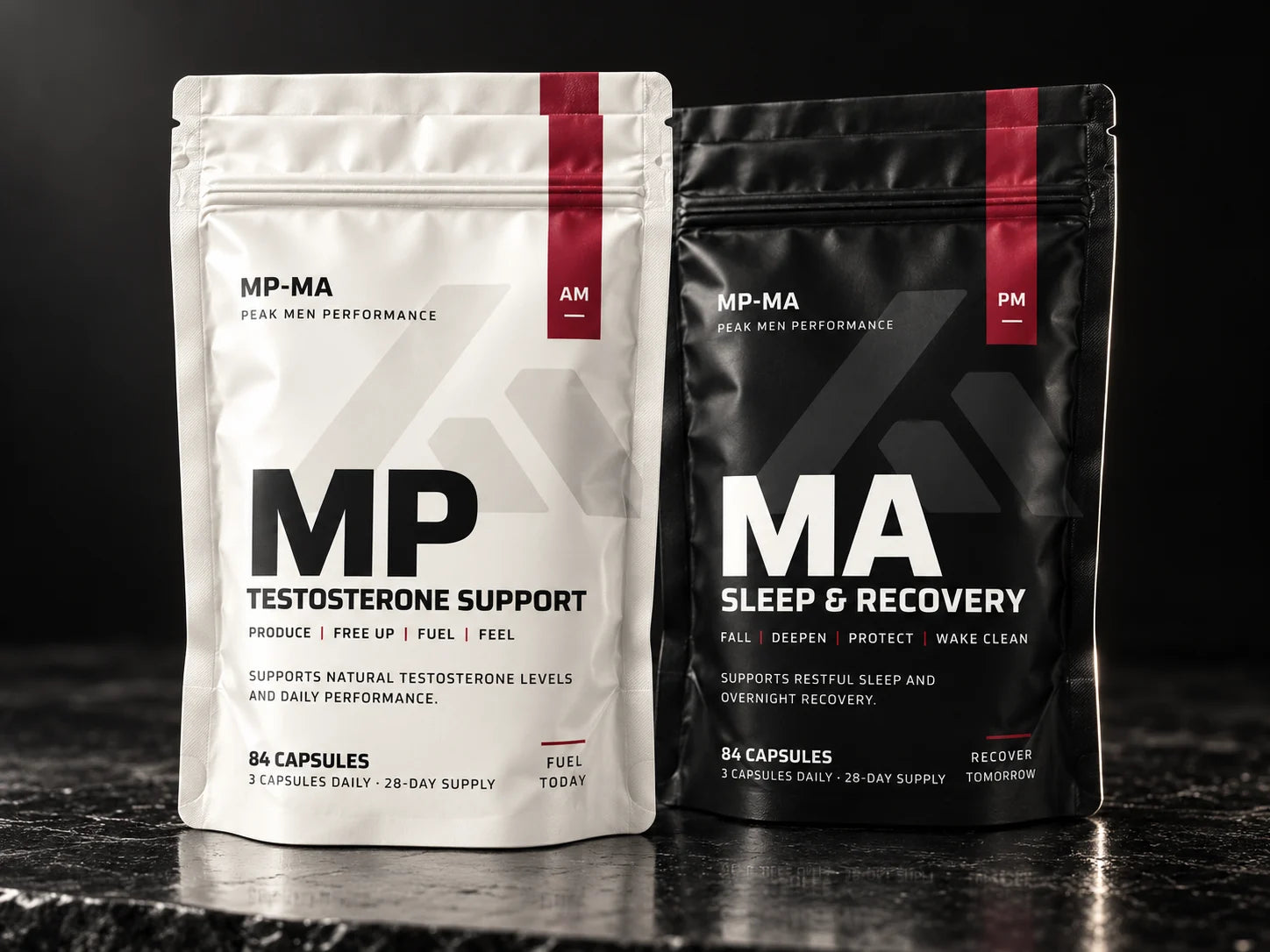
MP-MA's philosophy is to combine studied ingredients at transparent doses across day and night. The daytime MP formula supports drive and energy, and the nighttime MA formula supports the deep sleep and recovery where testosterone is made. See the full ingredient breakdown on our science page or explore the MP-MA Day & Night System.
Frequently asked questions
Does Tongkat Ali raise testosterone?
Human studies have linked standardised extracts to higher testosterone and lower cortisol, especially in stressed or older men.
How long does Tongkat Ali take to work?
Trials generally ran four weeks or longer; expect a gradual effect on stress, energy and drive.
When should I take Tongkat Ali?
Many men take it in the morning because it can feel energising, but consistency matters more than exact timing.
Is Tongkat Ali safe?
It was generally well tolerated in studies. If you take medication or have a health condition, speak to your doctor first.
Sources
- Talbott SM, et al. Effect of Tongkat Ali on stress hormones and psychological mood state in moderately stressed subjects. J Int Soc Sports Nutr. 2013. PubMed
- Henkel RR, et al. Tongkat Ali as a potential herbal supplement for physically active male and female seniors. Phytother Res. 2014. PubMed
- NIH Office of Dietary Supplements - Dietary supplements fact sheets. ods.od.nih.gov
- MP-MA. The science & full reference list. mp-ma.com/pages/science
These statements have not been evaluated by the Food and Drug Administration. This product is not intended to diagnose, treat, cure, or prevent any disease. This article is for general education and is not medical advice.