- Much of a man's testosterone is produced during sleep, and it peaks in the early morning after a full night.
- Short or fragmented sleep has been shown to measurably lower daytime testosterone.
- It is a two-way street: low testosterone can also worsen sleep, so the two decline together.
- Protecting deep sleep - habits first, then studied nutrients - is one of the most effective levers you have.
If you want to support healthy testosterone, the most underrated place to start is not the gym or the supplement aisle - it is your bedroom. For men, sleep and testosterone are tightly linked, and the connection runs deeper than most people realise.
This guide explains how your body makes testosterone overnight, what the research actually shows about sleep loss, why it becomes a self-reinforcing cycle, and exactly how to protect the deep sleep your hormones depend on.
Your body makes testosterone while you sleep
In other words, sleep is not passive downtime for a man's hormones - it is active production time. The quality and continuity of your night directly shapes how much testosterone you wake up with.
What the research shows
The clearest demonstration came from a study published in JAMA: healthy young men restricted to five hours of sleep for one week saw their daytime testosterone fall by 10-15% - a drop comparable to ageing 10 to 15 years (Leproult & Van Cauter, 2011). Broader research continues to associate short and fragmented sleep with lower testosterone and worse next-day energy, mood and drive. Importantly, the effect showed up in just one week, which tells you how quickly sleep debt can register.

A two-way street
The relationship runs in both directions. Poor sleep lowers testosterone - and lower testosterone can, in turn, make sleep lighter and more fragmented. That creates a loop: a few bad nights nudge your hormones down, which makes the next nights worse. The encouraging news is that the loop almost always breaks from the sleep side first, so improving your nights is the highest-leverage move you can make.
Why deep sleep specifically matters
Not all sleep is equal. Deep (slow-wave) sleep, concentrated in the first half of the night, is when your body does its heaviest physical and hormonal repair. As the night goes on, sleep lightens and dreaming increases. If your deep sleep is cut short - by alcohol, stress, late screens or simply going to bed too late - you lose a disproportionate amount of the most restorative, testosterone-supporting sleep.
How to protect your deep sleep
Start with the habits that have the biggest effect:
- Keep a consistent sleep and wake time, even on weekends.
- Keep the bedroom cool, dark and quiet.
- Stop caffeine by early afternoon and keep alcohol moderate and early.
- Get morning daylight and dim the lights in the evening.
- Put screens away 30-60 minutes before bed.
Then support the night with studied nutrients. Magnesium supports the calming side of the nervous system, glycine before bed has been shown to improve sleep quality (Bannai et al., 2012), L-theanine supports calm without sedation (Hidese et al., 2019), and ashwagandha may help lower evening stress (Lopresti et al., 2019). You do not need melatonin to do this - it shifts your clock rather than deepening recovery.
Where MP-MA fits
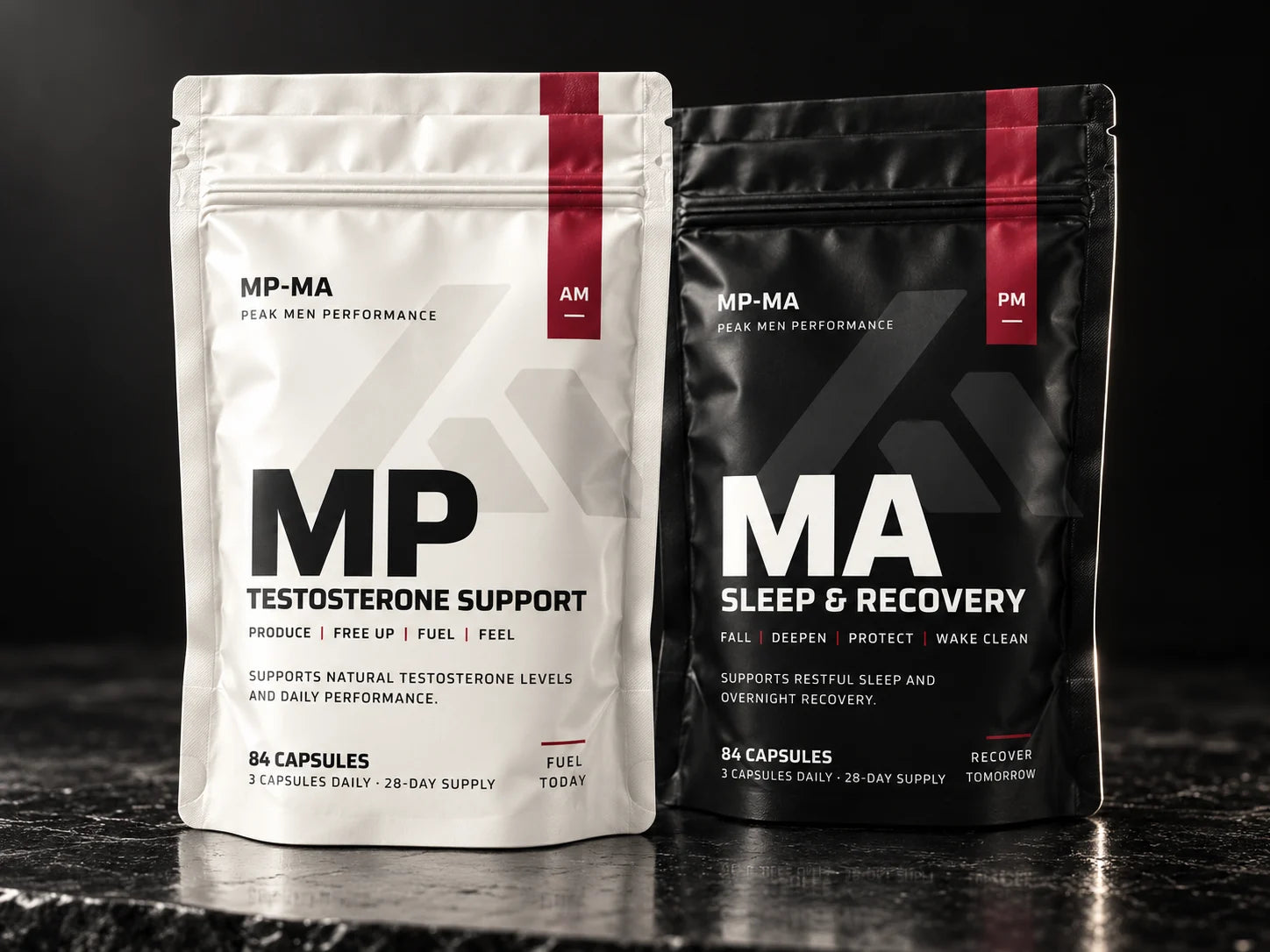
MP-MA's melatonin-free MA formula is built for this exact window - glycine, magnesium, L-theanine, ashwagandha and more to support deep sleep and overnight recovery, with MP supporting the day. Every dose is on the label. See the research on our science page or explore the MP-MA Day & Night System.
Frequently asked questions
Does deep sleep increase testosterone?
Your body produces much of its testosterone during sleep, so protecting deep sleep supports healthy levels.
How many hours of sleep do I need for healthy testosterone?
Most men do best on 7-9 consistent hours. Restricting sleep has been shown to lower daytime testosterone.
Does low testosterone cause poor sleep?
It can - low testosterone is associated with lighter, more fragmented sleep, which is why the two often decline together.
What is the fastest way to improve sleep for testosterone?
Fix your sleep and wake times, cut late caffeine and alcohol, and support the night with studied nutrients like magnesium and glycine.
Sources
- Leproult R, Van Cauter E. Effect of 1 week of sleep restriction on testosterone levels in young healthy men. JAMA. 2011. PubMed
- Bannai M, et al. The effects of glycine on subjective daytime performance in partially sleep-restricted healthy volunteers. Front Neurol. 2012. PubMed
- Hidese S, et al. Effects of L-theanine on stress-related symptoms and cognitive function. Nutrients. 2019. PubMed
- Lopresti AL, et al. An investigation into the stress-relieving and pharmacological actions of an ashwagandha extract. 2019. PubMed Central
- NIH Office of Dietary Supplements. Magnesium - Health Professional Fact Sheet. ods.od.nih.gov
- MP-MA. The science & full reference list. mp-ma.com/pages/science
These statements have not been evaluated by the Food and Drug Administration. This product is not intended to diagnose, treat, cure, or prevent any disease. This article is for general education and is not medical advice.