- You cannot out-supplement a broken foundation: sleep, training, body fat and stress move testosterone the most.
- Specific nutrients - vitamin D, magnesium, zinc and ashwagandha - have human evidence behind them, but mainly when you are low or stressed.
- Consistency over months, not a single dose, is what shifts your levels.
- If symptoms are severe or persistent, get bloodwork - this guide supports healthy men, it does not replace medical care.
"How do I raise my testosterone naturally?" is one of the most searched questions in men's health - and most of the answers online are either useless or trying to sell you something in the first sentence. This guide is different: it walks through what actually moves the needle, in order of impact, and is honest about where supplements help and where they don't.
Start with the foundation
No pill overrides five hours of sleep, chronic stress and excess body fat. Get the foundation right and the targeted nutrients below have something to build on.

1. Sleep - the biggest lever
Most of a man's testosterone is produced during sleep. In a controlled study, healthy young men restricted to five hours a night for one week saw testosterone drop 10-15% (Leproult & Van Cauter, 2011). Prioritise 7-9 consistent hours, protect your deep sleep, and you protect your most important production window. If you fix only one thing on this list, fix this.
2. Train the right way
Resistance training - compound lifts like squats, deadlifts, presses and rows - is the form of exercise most consistently linked to healthy testosterone. Short, intense sessions beat endless cardio for this purpose. Importantly, recovery matters as much as the work: overtraining without enough sleep and food pushes the body toward a more catabolic, higher-cortisol state.
3. Body fat and diet
Excess body fat, especially around the midsection, is associated with lower testosterone, partly because fat tissue converts testosterone into estrogen. Getting to a healthy body-fat range is one of the most reliable natural levers. On the plate: eat enough protein, don't crash your calories, and don't fear dietary fat - very low-fat diets have been associated with lower testosterone. Whole foods, enough total energy, and key micronutrients (below) cover most of it.
4. Stress and cortisol
Cortisol, your main stress hormone, works in opposition to testosterone - when one is chronically high, the other tends to suffer. Chronic stress is one of the most underrated testosterone killers. This is also where an adaptogen like ashwagandha earns its place: in a randomised trial, supplementation was associated with lower cortisol and higher testosterone in stressed men (Lopresti et al., 2019).
5. The nutrients that have evidence
Once the foundation is in place, a few nutrients have genuine human research - mostly in men who are deficient or under stress:
- Vitamin D - men supplementing for a year saw higher testosterone versus placebo in one trial; many men are low, especially in winter (Pilz et al., 2011).
- Zinc - a mineral essential for testosterone production; deficiency has been shown to lower levels, and correcting it restores them (Prasad et al., 1996).
- Magnesium - involved in hundreds of processes including hormone regulation; many men fall short of the recommended intake.
- Ashwagandha - linked to higher testosterone and strength in resistance-trained men (Wankhede et al., 2015) and to lower stress (Lopresti et al., 2019).
The honest caveat: these work best when you are low or stressed. They are support, not a shortcut around the foundation.

How long until it works?
Natural changes are gradual. Sleep and stress improvements can be felt within a week or two, while nutrient-level changes (vitamin D, zinc, ashwagandha) are typically studied over 8-16 weeks. Think in terms of months of consistency, not days - and judge progress by energy, drive, training and mood, not just a single number.
Where MP-MA fits
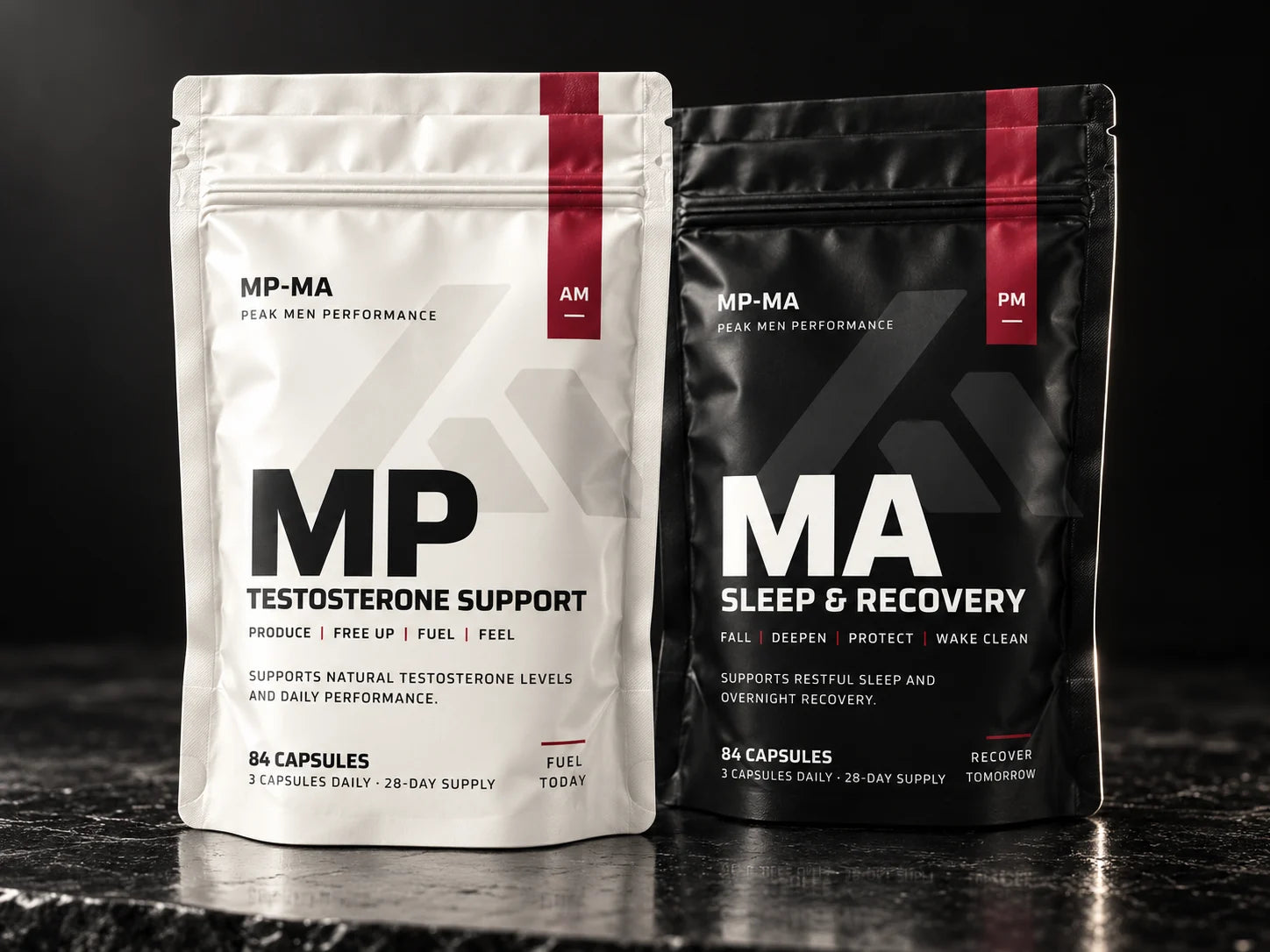
MP-MA packages several of these studied nutrients into a simple day-and-night system: MP supports daytime drive and energy, and MA supports the deep sleep and recovery where testosterone is made - ashwagandha, magnesium, zinc, vitamin D and more, every dose on the label. See the full breakdown on our science page or explore the MP-MA Day & Night System.
Frequently asked questions
What raises testosterone the fastest naturally?
Fixing sleep and reducing chronic stress give the quickest noticeable change; body composition and nutrients build on that over months.
Do testosterone supplements actually work?
Specific nutrients with human evidence - vitamin D, zinc, magnesium, ashwagandha - can help, mainly when you are deficient or stressed. They support healthy levels rather than acting like a drug.
Does lifting weights increase testosterone?
Resistance training, especially compound lifts, is the exercise most consistently linked to healthy testosterone - with adequate recovery.
When should I see a doctor?
If you have persistent fatigue, low libido or mood changes, get bloodwork. Natural strategies support healthy men but don't replace medical care.
Sources
- Leproult R, Van Cauter E. Effect of 1 week of sleep restriction on testosterone levels in young healthy men. JAMA. 2011. PubMed
- Wankhede S, et al. Examining the effect of Withania somnifera supplementation on muscle strength and recovery. J Int Soc Sports Nutr. 2015. PubMed
- Lopresti AL, et al. An investigation into the stress-relieving and pharmacological actions of an ashwagandha extract. 2019. PubMed Central
- Pilz S, et al. Effect of vitamin D supplementation on testosterone levels in men. Horm Metab Res. 2011. PubMed
- Prasad AS, et al. Zinc status and serum testosterone levels of healthy adults. Nutrition. 1996. PubMed
- NIH Office of Dietary Supplements - Vitamin D, Zinc & Magnesium fact sheets. ods.od.nih.gov
- MP-MA. The science & full reference list. mp-ma.com/pages/science
These statements have not been evaluated by the Food and Drug Administration. This product is not intended to diagnose, treat, cure, or prevent any disease. This article is for general education and is not medical advice.
Continue your research
Our resistance-training guide explains the difference between a temporary hormone response and a lasting change in resting testosterone. Does Lifting Weights Increase Testosterone?
Browse related topics in our men’s wellness evidence guide.