- Natural testosterone-support supplements work gradually - think weeks and months, not days.
- Sleep and stress improvements can be felt within 1-2 weeks; nutrient-level changes typically take 8-16 weeks.
- The clinical trials behind ingredients like ashwagandha, vitamin D and zinc generally ran 8 weeks or longer.
- Judge progress by energy, sleep, drive and training - not by expecting an overnight switch.
"How long until I feel it?" is the question everyone asks after buying a testosterone-support supplement - and the honest answer is the one marketing avoids: it takes time. This guide gives you a realistic timeline, explains why, and shows you what to actually watch for along the way.
The short answer
Anything promising a result in days is selling a feeling, not a physiological change.
A realistic timeline
- Week 1-2: the first thing most men notice is sleep and stress - falling asleep more easily, calmer evenings, slightly steadier energy (especially with nutrients like magnesium, glycine and ashwagandha).
- Week 3-6: daytime energy, mood and training drive often become more consistent as sleep quality compounds.
- Week 8-16: the nutrient- and hormone-level effects studied in trials (vitamin D, zinc, ashwagandha) reach their fuller expression - this is the window the research actually measured.
Why it takes this long
Natural ingredients nudge your body's own systems rather than injecting a hormone. Vitamin D levels rise slowly as stores refill. Ashwagandha's effect on cortisol and testosterone built over 8 weeks in trials (Lopresti et al., 2019; Wankhede et al., 2015). Zinc corrects a deficiency over weeks (Prasad et al., 1996). And the biggest lever - deep sleep - improves hormones night after night, cumulatively, not in a single dose. Biology compounds; it doesn't flip a switch.
What makes it faster (or slower)
Faster: starting from a deficiency (e.g. low vitamin D or zinc), fixing your sleep at the same time, training consistently, and being genuinely consistent with the supplement. Slower: skipping doses, continued poor sleep, high chronic stress, and expecting a supplement to override a broken foundation. The men who see the least are almost always the ones still sleeping five hours a night.

How to track progress
- Keep a simple log of sleep quality, morning energy, mood and training - subtle improvements are easy to forget.
- Give it 8-12 weeks before judging; that is the window the research used.
- Consider bloodwork before and after if you want an objective number, especially for vitamin D.
- Watch the trend, not the day - energy and drive naturally fluctuate day to day.
Where MP-MA fits
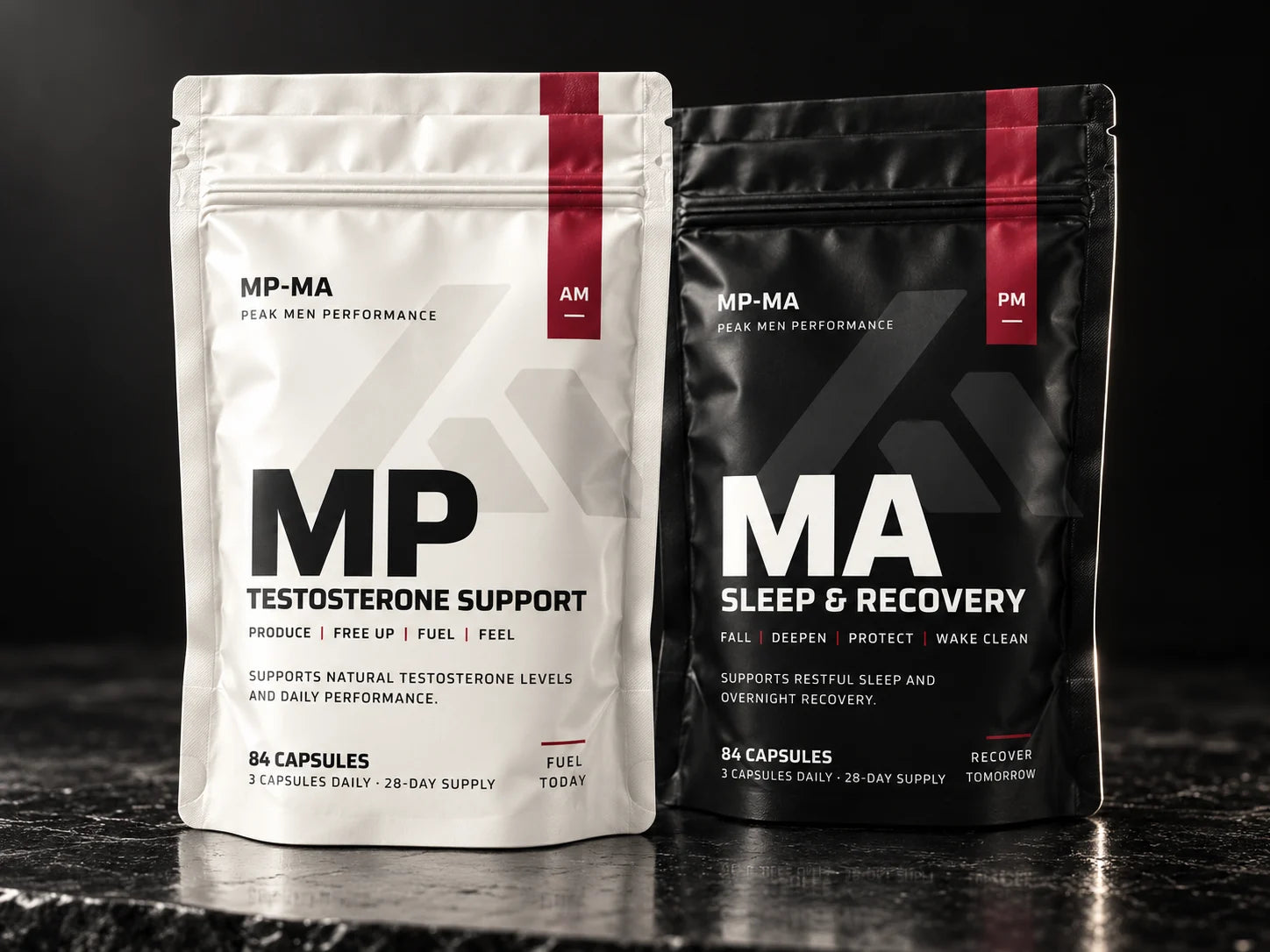
MP-MA is designed for exactly this kind of consistent, compounding use: MP by day and MA by night, built around studied ingredients at transparent doses so you know precisely what you are taking across the full timeline. See the research on our science page or explore the MP-MA Day & Night System.
Frequently asked questions
How long do testosterone supplements take to work?
Natural support supplements typically take several weeks to a few months; sleep and stress benefits come first, hormonal changes over 8-16 weeks.
Should I feel something on day one?
Not a hormonal change. Some men notice calmer sleep early on, but real effects build with consistency.
When should I give up if I feel nothing?
Give it at least 8-12 weeks of consistent use alongside good sleep before deciding - that is the window the studies used.
Will it work faster if I take more?
No - exceeding sensible doses doesn't speed results and can backfire (e.g. high-dose zinc). Consistency beats megadosing.
Sources
- Lopresti AL, et al. An investigation into the stress-relieving and pharmacological actions of an ashwagandha extract. 2019. PubMed Central
- Wankhede S, et al. Examining the effect of Withania somnifera supplementation on muscle strength and recovery. J Int Soc Sports Nutr. 2015. PubMed
- Pilz S, et al. Effect of vitamin D supplementation on testosterone levels in men. Horm Metab Res. 2011. PubMed
- Prasad AS, et al. Zinc status and serum testosterone levels of healthy adults. Nutrition. 1996. PubMed
- MP-MA. The science & full reference list. mp-ma.com/pages/science
These statements have not been evaluated by the Food and Drug Administration. This product is not intended to diagnose, treat, cure, or prevent any disease. This article is for general education and is not medical advice.